
Zac Claus: More Than A Season
Published on Apr 6 2026
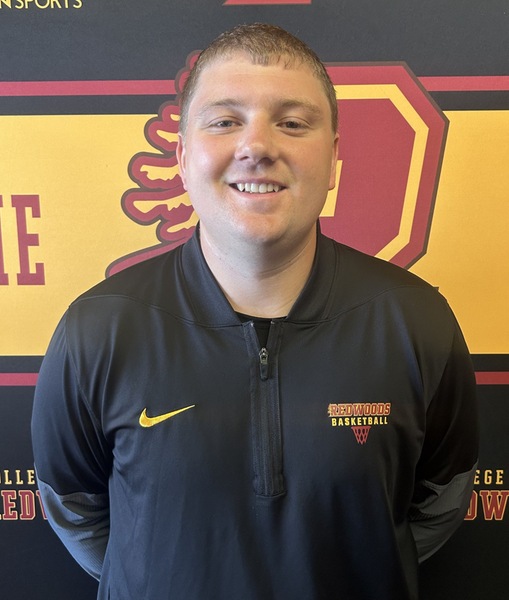 It was an exciting time in the Eel River Valley, especially around Fortuna High School
boys basketball.
It was an exciting time in the Eel River Valley, especially around Fortuna High School
boys basketball.
The year was 2019.
Before the world shut down.
Before words like lockdown, quarantine, and six feet apart found their way into everyday conversation, life moved with an easy closeness we hardly noticed.
The 2018–2019 Fortuna boys basketball team finished 30–3. But the numbers only tell part of the story.
The magic lived in the starting five: Zac Claus, Drew Gillette, twins Bradley and Donald Willis, and Kevin Noel. Five players who didn’t just share the court. They shared years of chemistry, trust, and an unselfish style of play that made something special feel inevitable.
They weren’t just winning. They were raising the standard of what was possible. It’s a season many still consider one of the greatest in Humboldt County history.
“We all just knew each other,” Zac says. “There wasn’t any ego. Everyone had a role, and we trusted it.”
And then came the moment no one quite expected.
The entire Humboldt community, stretching even into Del Norte County, paused when Zac, Drew, Bradley and Donald committed to College of the Redwoods.
What it meant was simple, but it said everything.
They weren’t done.
We weren’t done.
There was a rare chance to keep watching something extraordinary for two more years.
But to understand where that story leads, you must go back to where it began for Zac.
Growing up in Rio Dell, the younger brother of head men’s basketball coach Justin Claus, Zac’s rhythm was shaped on grass fields, baseball diamonds, and the hardwood where he attended Eagle Prairie Elementary, Monument Middle School, and Fortuna High.
A quarterback.
A pitcher.
A point guard.
A right arm that no one ever called into question. A quiet leader whose voice showed up when it mattered most.
Zac brought a cerebral approach to the sports he played. He wasn’t the most explosive athlete, he admits. That was never the point.
“It was more about angles, anticipation,” he says. “You see situations so many times, you start to know what’s going to happen before it does.”
And during his senior basketball season, something shifted.
“I remember walking into the Fortuna High gym,” Zac says, pausing, emotion briefly closing in around his words. “Sorry…”
He takes a breath.
He still remembers.
“The floors felt like they were sweating. The walls felt like they were sweating. There were so many people, it almost didn’t feel real.”
It was a high school moment, but it felt bigger than that.
A packed gym in a small town.
A community showing up.
A team worth showing up for.
In that moment, it all came into focus. What they had built was no longer just theirs, but it also belonged to the community that carried it with them.
Ryan Bisio remembers sitting down and meeting with them before they’d made their commitment to College of the Redwoods.
“So, we decided to meet at the Funky Monkey in Fortuna, a restaurant which has since gone under. I was nervous and made a terrible decision to order more coffee. I talked non-stop and couldn’t stop myself. The twins (Bradley and Donald) just blankly stared at me and didn’t say anything. I thought for sure I’d ruined my opportunity.
Years later — they admitted to me that they had already made up their minds that they were going to CR before we met at the Funky Monkey. They just wanted to see me sweat it out and wanted to at least get a free meal out of the commitment. Zac knew and was in on the whole thing. That’s the thing about Zac’s strategic thinking…and why I believe in him as a coach and am grateful he’s with us.”
And what happened next? Zac and his teammates, including Jon Nchekwube, went on to win two Golden Valley Conference titles before continuing their journeys.
After time at the University of Puget Sound, the opportunity to return home and coach alongside Ryan Bisio and Justin Claus at College of the Redwoods was one Zac embraced fully.
And with him, he brought lessons that still shape how he leads.
Now, as a coach, that packed gym stays with him. Not for the noise, but for what it represented.
A community showing up.
A team worth showing up for.
That’s what he carries forward.
Because long after the wins and records fade, it’s that feeling that lasts.
People believing in something together.
Not just players.
But a team a community can gather around.
At Puget Sound, another lesson took shape. It was quieter, but just as lasting.
“They had us all write down how many minutes we thought we should play,” Zac recalls. “There’s 200 minutes in a game, but when everyone writes their number down, it adds up to like 400.”
The point wasn’t math, it was perspective.
“Not everyone’s going to get what they want,” he says. “But if the team gets what it wants, that’s the real satisfaction.”
It’s not about diminishing players. It’s about inviting them into something bigger.
“That buy-in matters,” he adds. “Even if it doesn’t go your way, being part of the process changes how you show up.”
That philosophy helps defines Zac as a coach.
After graduating from Cal Poly Humboldt, Zac now finds himself guiding players not far removed from his own playing days. It’s a delicate balance.
“You have to figure out where you stand,” he says. “Be confident in what you’re saying, but also understand how different players hear things.”
Even his work as a poker dealer at Bear River Casino, has shaped that perspective.
“You deal with all kinds of personalities,” he says. “You learn how to manage situations, how to communicate. It helps more than you’d think.”
On the court, his philosophy mirrors his playing days. Structured, but never rigid. Creative but disciplined.
“There’s always a plan,” he says. “But if you see something better, go do it. Just don’t hesitate.”
But there’s one non-negotiable. “You have to buy in.”
That belief shows up in the way the CR teams play.
Unselfish.
Connected.
Intuitive.
A type of team basketball where no one chases the spotlight, because everyone understands the bigger picture.
“It’s like improv,” Zac says. “Don’t say no. Just keep it moving.”
It’s also why his teams tend to grow stronger as the season goes on.
“The more time we spend together, road trips, practices, everything, the more connected it gets,” he says. “And that shows up on the court.”
Ask him about the hardest lesson he’s learned, and he doesn’t point to wins or losses.
“Confidence,” he says. “Not on the court. I had that. But communicating it, teaching it, that’s different.”
It’s still evolving.
So is the future.
“I don’t really know where I’ll be in five years,” he says. “But I know I want to stay around sports. Something active. Something with people.”
Maybe a high school coach. Maybe something else.
The path isn’t fixed.
But the foundation is.
It begins in small-town gyms, in those long afternoons playing whatever sport that was in front of you, and in the quiet understanding that the best teams aren’t built on individual moments, but on what’s shared.
Somewhere in that space, between instinct and structure, between player and coach, Zac Claus is still finding the flow.
And College of the Redwoods is extremely lucky to have him.