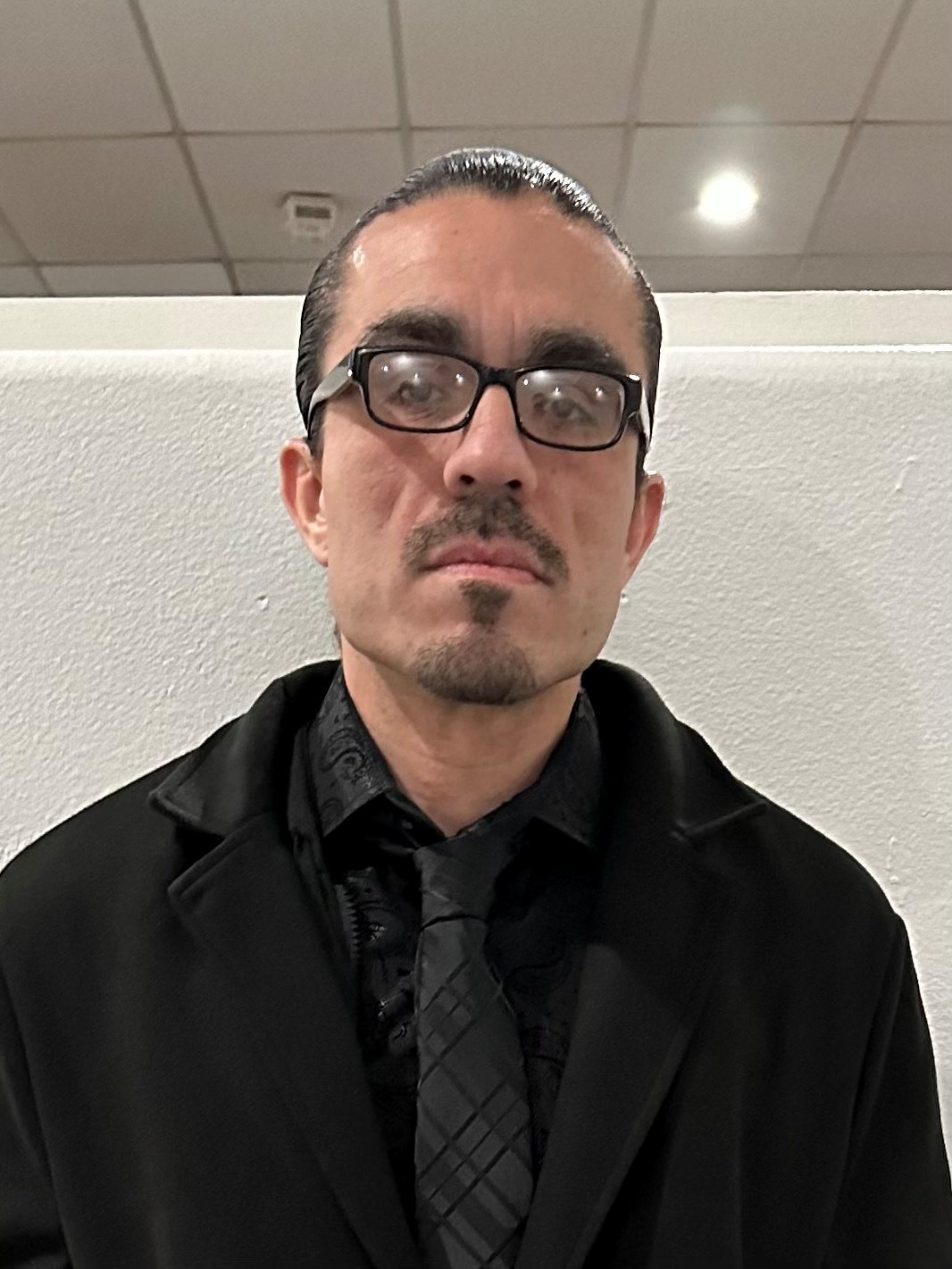
The Rise of Javier De La Torre
Published on Jan 13 2026Hope, Education, and CR’s Pelican Bay Scholars Program: The Rise of Javier De La Torre
A moment that would echo through the rest of Javier De La Torre’s life arrived without warning.
A man stepped through the door of his family’s home, asked Javier’s mother to call her son into the room, and when she did, he raised a gun and fired.
Javier’s brother, just eighteen years old at the time—gone in the time it takes to exhale.
A future severed, a family changed forever.
It was brutal, senseless, and permanent.
But Javier did not begin in tragedy, and he did not end there either. His story moves differently. It does not curve toward pity. It moves with the gravitational pull of a person who has carried responsibility for so long that the muscles for it have memory.
He grew up in Los Angeles, though not the Los Angeles of perfect summer day postcards, no. His was a city of cracked concrete, linguistic bruises, and systems that never bothered to hide their disinterest in boys like him. He learned English the way some kids learn to dodge trouble, quickly, at a sprint, through necessity. School was a place where a quiet kid could disappear without anyone noticing the brilliance beneath the silence.
“I grew up believing I wasn’t smart, that school wasn’t for me,” Javier said. “I just felt invisible.”
By his teens, gang life wasn’t just influence, it was identity. Recognition came in dangerous doses, but it was recognition, nonetheless. What he didn’t get in classrooms, he learned on streets that demanded clarity. He was known as Youngster, a name not given, but earned. The gang life caught him how to show up, how to protect, how to stay steady when the ground moved. Respect came with a cost, but it was a currency he understood.
“The more I did, the more respect I got,” he said. “Nobody ever told me about the bad parts, like losing your life, losing your family.”
Years blurred into a rhythm: survival, pressure, acceleration, the narrowing path that comes when the world gives responsibility without guidance.
The justice system entered the frame, not as if it was a sudden fall but as the next mile marker on a road he’d never had the luxury to step off. Then? A 23-year sentence. Concrete echoing where possibility should have been.
From inside the prison walls, life kept moving. His family home, nearly a million dollars in value, was sold by an uncle who kept everything, despite the law saying Javier was entitled to half.
But Javier did not shrink. He didn’t wait for mercy. He didn’t wait for rescue. He watched the world underestimate him and built something inside himself anyway.
So, he started studying for the GED exam. He didn’t think he would pass. Loud echoes of old thought patterns infiltrated his mind. But then? Light arrived quietly. First through Ms. Stanley, who walked into the Secure Housing Unit (SHU) at Corcoran with a piece of paper that said he had passed his GED. She saw him.
Not the file.
Not the number.
Him.
“I couldn’t believe I had passed,” he said. “Ms. Stanley believed in me even when I didn’t believe in myself.”
Then came a small procession: men from the SHU at Corcoran, stepping out of decades of isolation into the general population. Men who might have been hardened or silent instead carried textbooks like lanterns.
“They came out preaching education,” Javier said. They told him plainly: Go to school, bro. You are not stupid.
Sometimes transformation is not a crescendo. Sometimes it is a single sentence spoken by someone who has survived just as he did.
Javier resisted at first.
Then he listened.
Then he said yes.
“That was the first time in my whole life I felt proud of myself. I didn’t need street recognition anymore. Education gave me self-worth.”
He approached learning like a man who had run out of excuses not to become himself. His sister bought the textbooks. Coastline College correspondence courses became a lifeline. When he transferred to Pelican Bay Prison from Tehachapi Prison, Javier was accepted into the College of the Redwoods Pelican Bay Scholars Program. It became a current that carried him forward even during lockdowns that froze everything else. CR faculty and staff like Ashley Knowlton (English Faculty) and Tori Eagles (Pelican Bay Scholars Program Manager) kept education alive.
“They (Ashley and Tory) bent over backward for us,” Javier said. “Even on lockdown, they made sure we got our assignments. They made things happen.”
Books do not change a person; they offer the pen to rewrite themselves.
And that’s exactly what Javier did. Earning not one, but two associate degrees, one in Social & Behavioral Sciences and the other in Sociology from College of the Redwoods, and yet they did not make him smarter; they just helped uncover what always had been there.
“Education lifts you up,” he said. “It changes the people around you, the way you think, the conversations you have. It opens doors you didn’t even know existed.”
Today, Javier moves between worlds with precision. He works as a paralegal in Eureka, guiding hundreds of people through legal systems designed and built to confuse and confound. He’s part of the Male Community Reentry Program in Long Beach. He’s finishing up his bachelor’s degree in communications at Cal Poly Humboldt in May 2026. And next? Law school. It’s not a dream, it’s a direction. A declaration.
“…I want to help people. When we change, we inspire others. It becomes a ripple effect.”
This isn’t a story of someone becoming new; it’s a story of stepping fully into who he has always been. It suggests growth, not recovery, because he was never lesser. He didn’t change who he was, only how he acted, how he unfolded, and how he let the intelligence, discipline, instinct, loyalty, and drive that had always been his finally speak.
“Don’t give up,” he tells others. “Stick to the path. People will see the change in you. People are not born evil. People can change if they are given resources and opportunities. I am living proof.”
In the quiet hours of his life now, when he is studying or drafting motions or helping someone find their footing in a system that once swallowed him whole, Javier carries a kind of light that was never handed to him, he forged it. His past is no longer a shadow trailing behind him but a constellation he’s learned to navigate by. And as he moves through the world, student, paralegal, partner, future lawyer, he does so with the calm certainty that nothing about his existence was ever small.
The boy who once felt invisible has become a man who refuses to let others disappear.
And in that steady, deliberate way, he is still rewriting what a life can be.